

Dec 1, 2026
LOT-EK lectures at RIT Vignelli Center, Rochester

our first shipping container design! A memorial and museum on slave trade + navigation on the westernmost point of Africa
1996
Fann, Dakar
UNESCO
220,000sf
Florian Oberhuber
concept & vision:
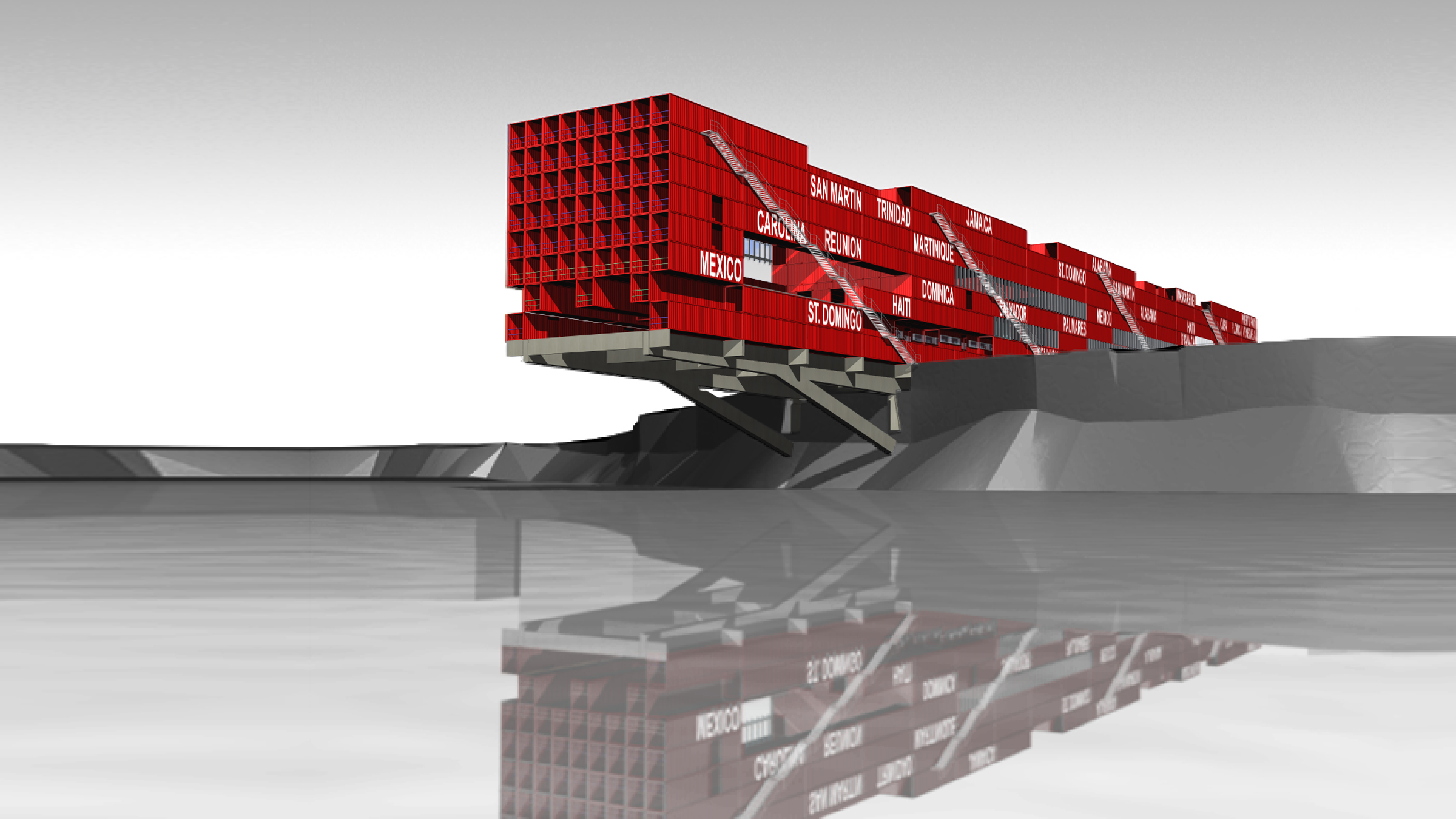
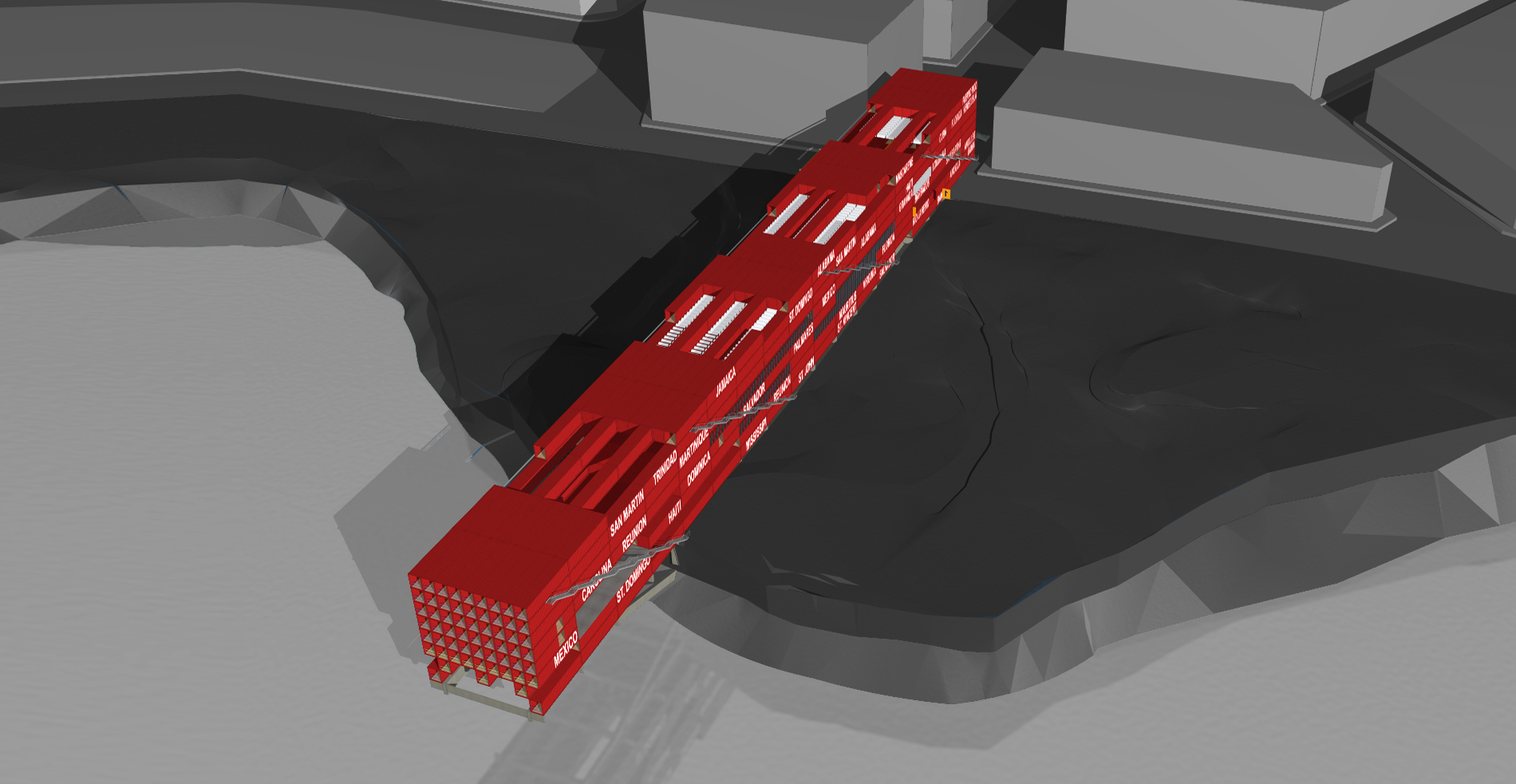
we imagine a monolithic element suspended between earth and water, jutting out into the ocean or penetrating into the land, about to take off or just landed, a truncated link between Black Africa and the Black Americas. A single architectural concept that unite the Memorial with the Museums/Research Center expressing the horror of the slave trade and the relevance of the trans-Atlantic exploration, and their co-existence
design & architecture
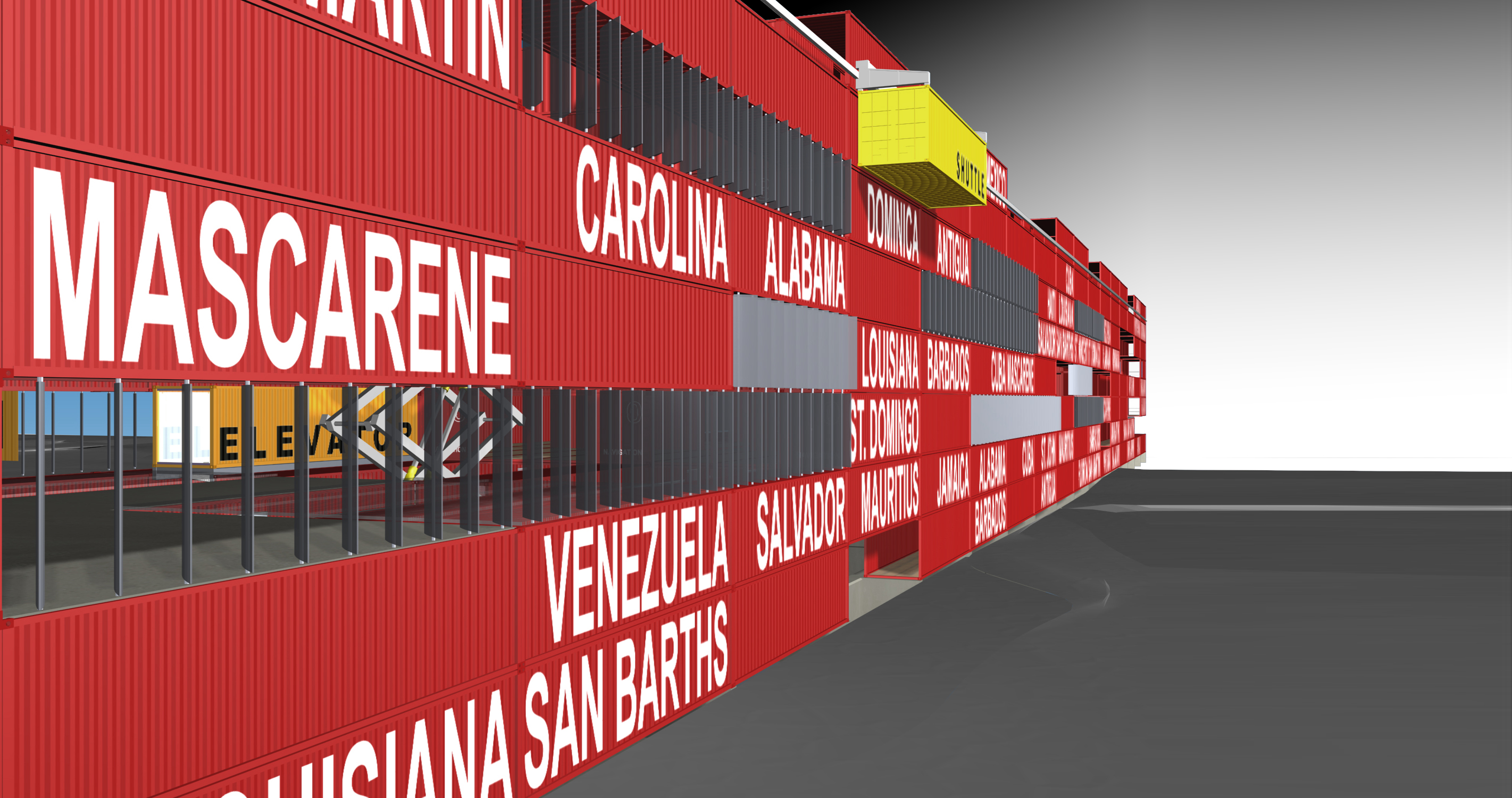
at a territorial level, we mark the earth/water edge at the westernmost point of Africa. At the urban level, we conceive the building to intrude from the ocean into the fabric of Dakar. At a more experiential level, we envision different paths through interior/exterior spaces to modulate the intensity of the visitor's experience. The Memorial is entirely made of shipping containers. The containers is used here as a symbol of global trade and movement as well as oppression and confinement, and inscribed with the names of the different destinations of both slave trade and discovery journeys
program & use
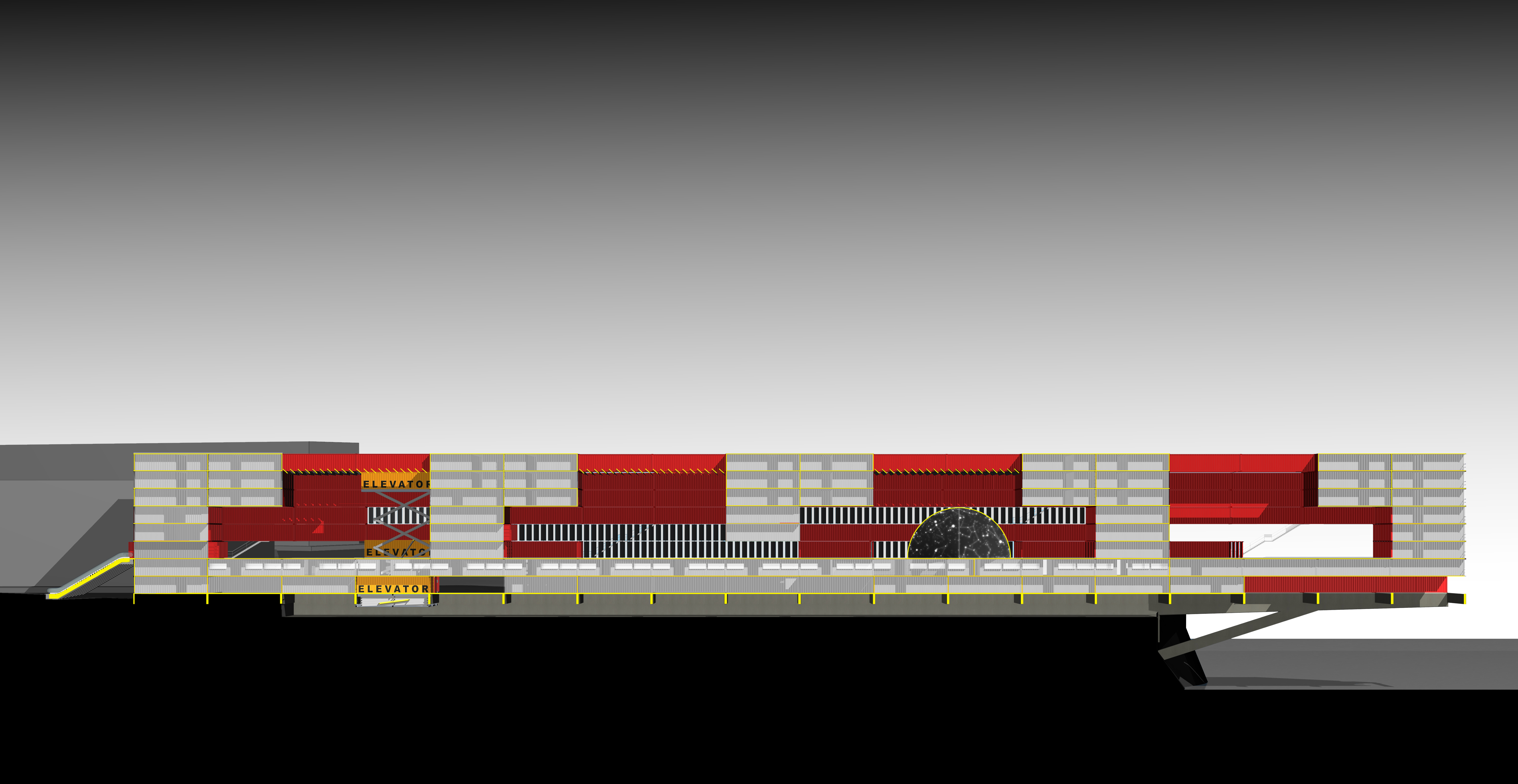
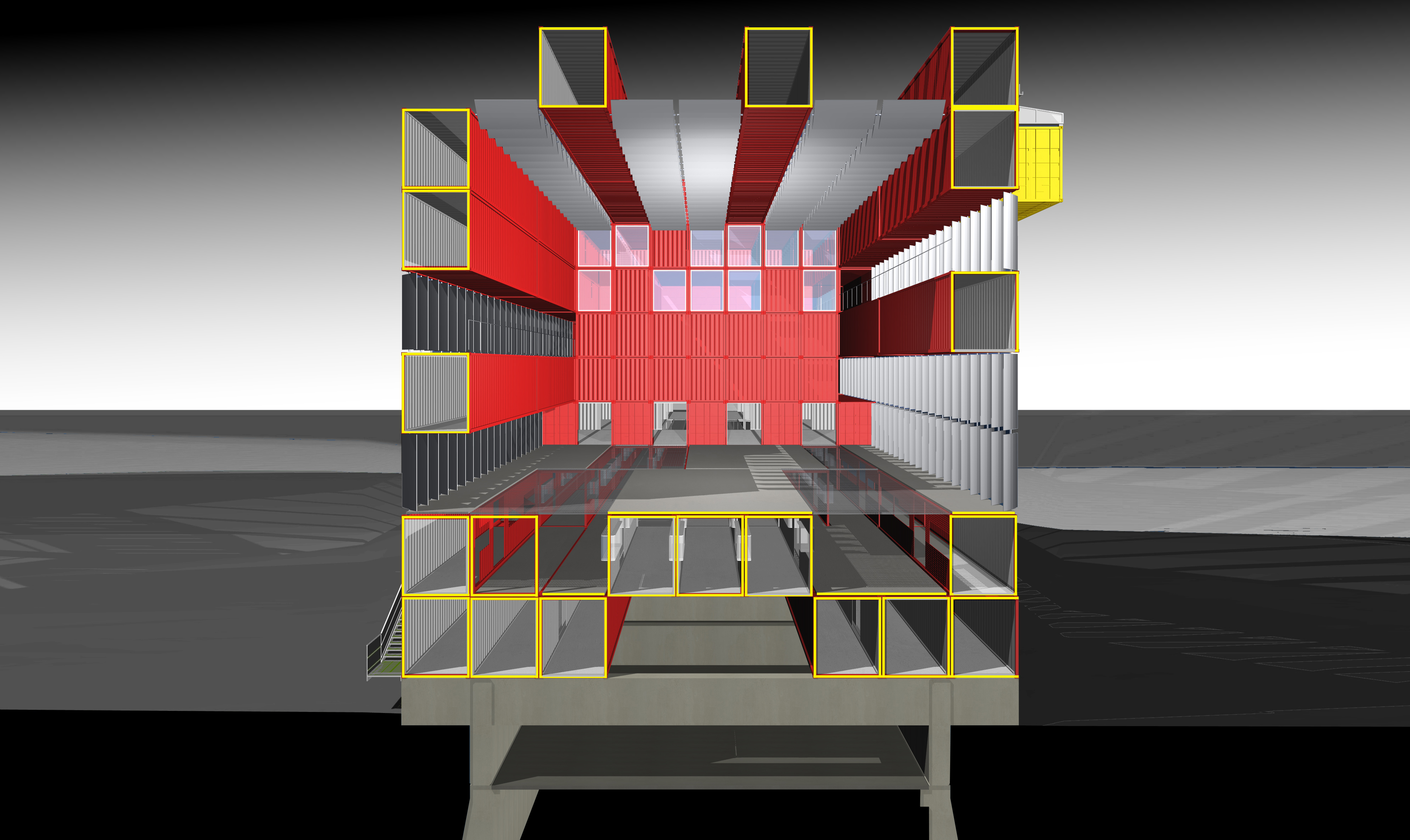
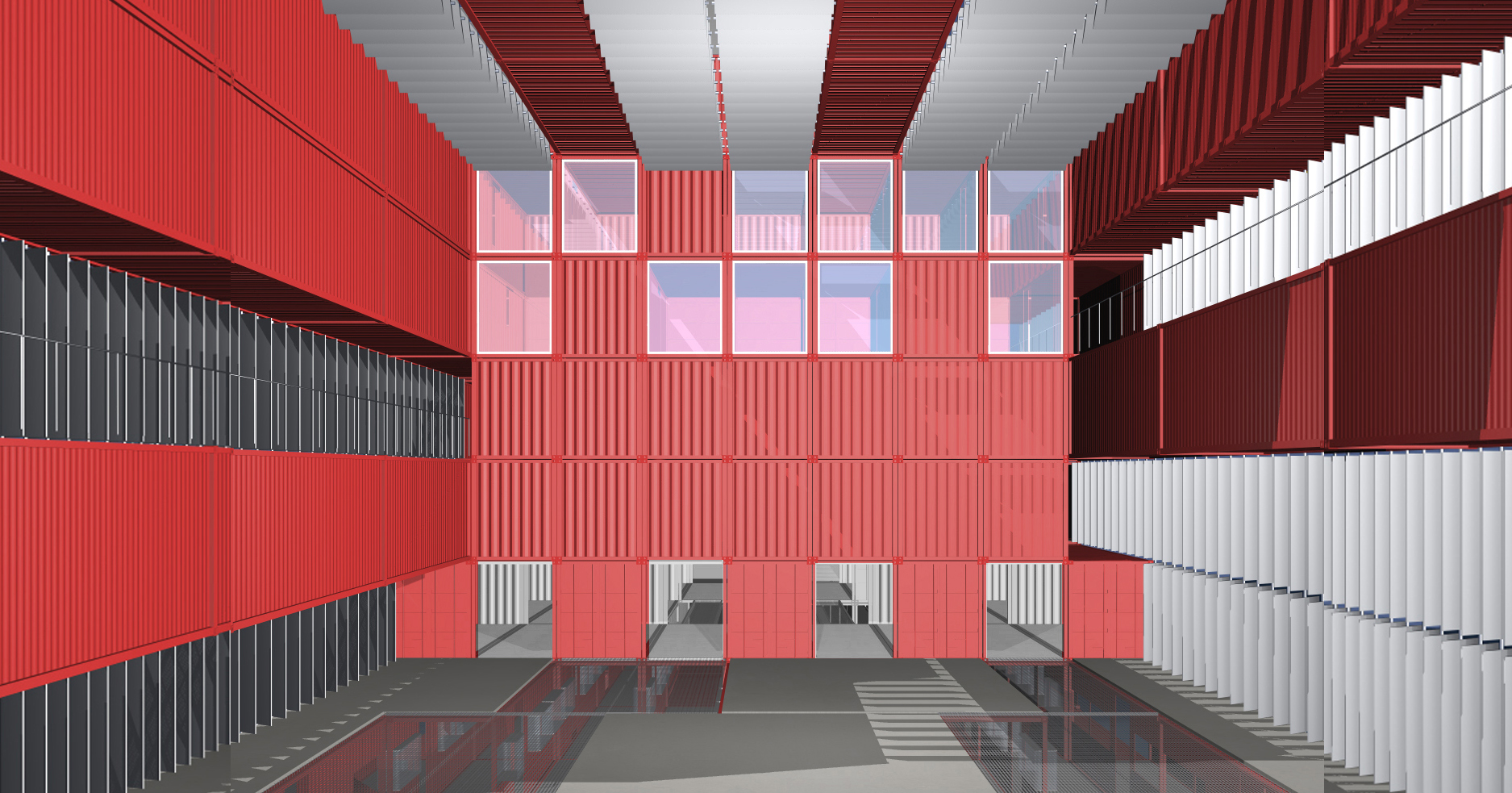
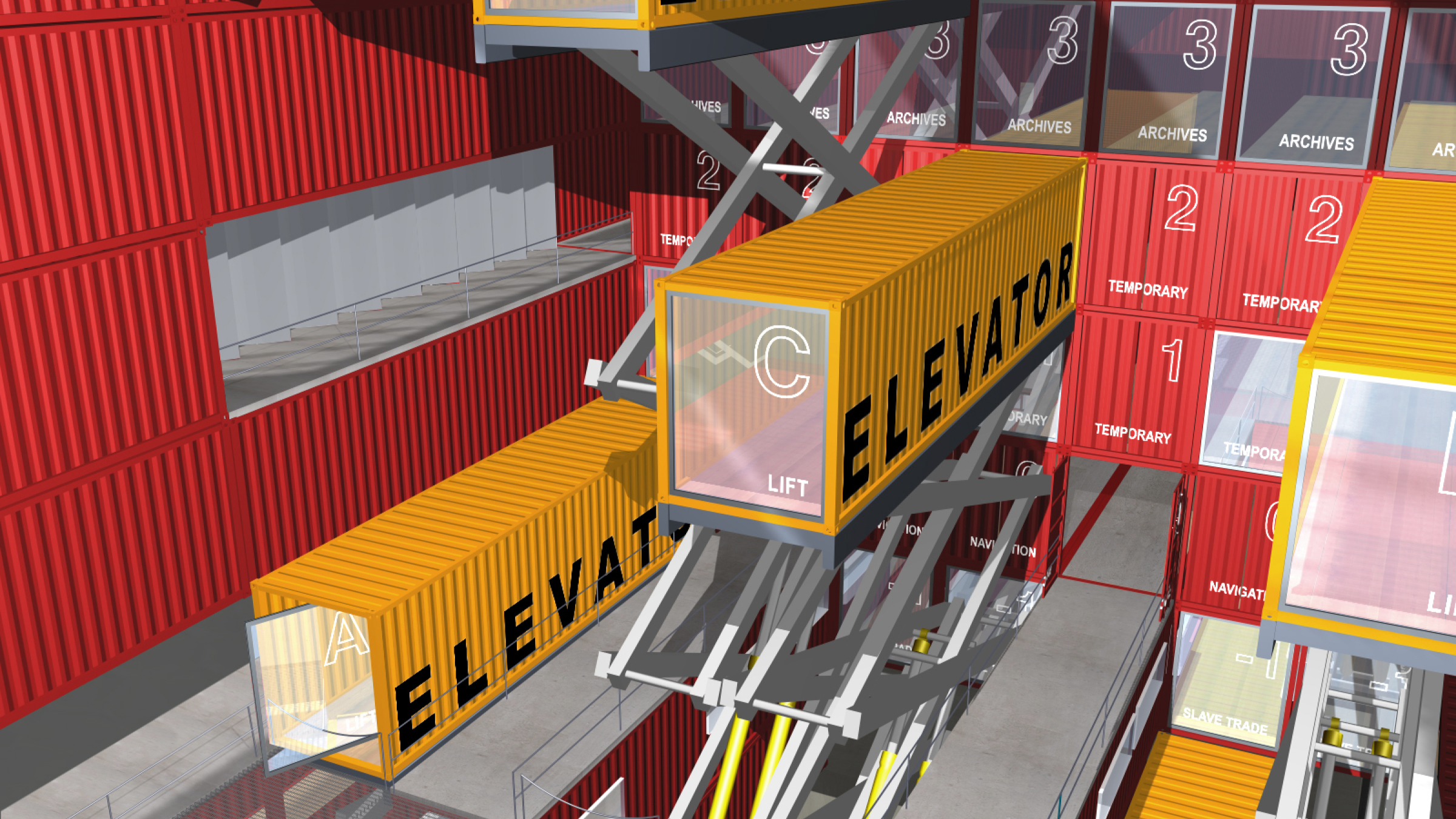
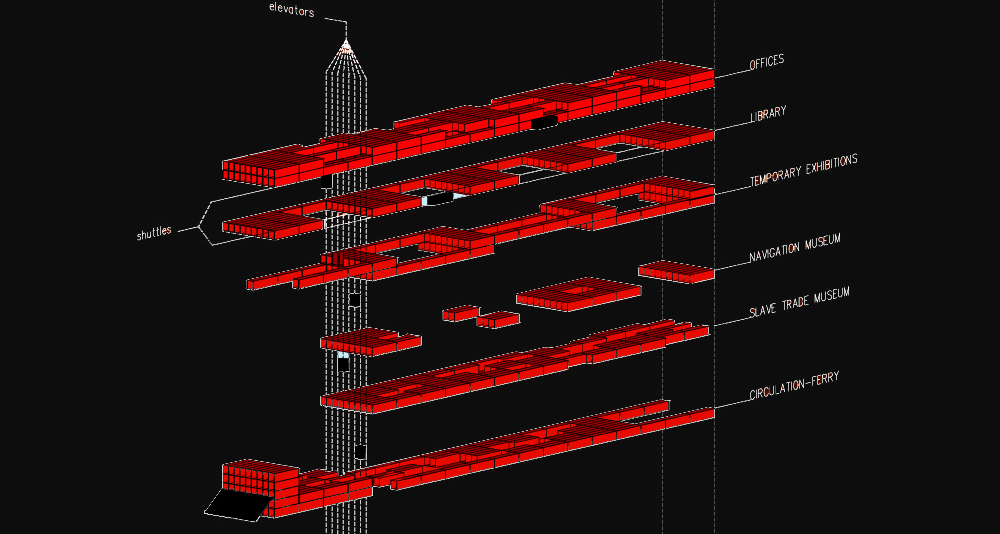
we consider the container as a spatial brick, and use it for its inner space as well as to delineate the larger spaces of the halls. As a self-supporting modular element, the container is pierced, stacked and combined to adapt to the different functions requirements. The Memorial is conceived as layers of containers, corresponding to layers of functions, interlocking with one another to form one self-contained horizontal prism. The spatial experience is modulated by the contrast between tunnel-like container interiors and the expansive halls defined by walls of stacked containers
impact & significance
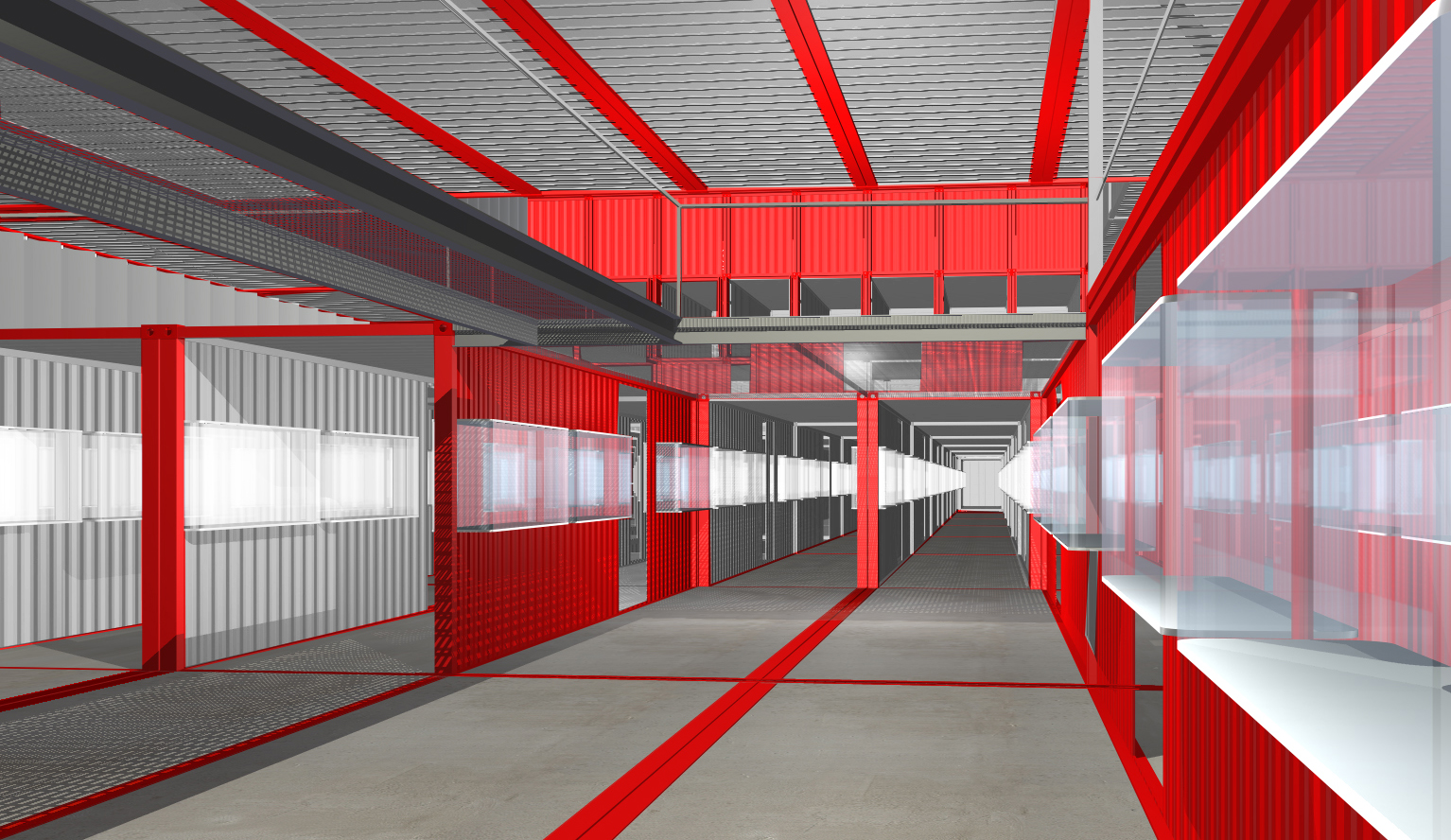
we explore the paradoxical coexistence of these two institutions, in parallel. The experience of the Slave Trade Museum is spatial and emotional. Its placement, on the lower part of the building, emulates the hold of a ship, so does its labyrinth-like layout where a succession of fragmented corridors and small halls suggests the atmosphere of the densely filled space of a slave trading ship. Containers are pierced for cross circulation and illumination, and furnished with glass showcases imbedded in their sides. In the Navigation Museum, on the layer immediately above, parallel corridors open up into large halls where large openings reveal the sight of land, ocean and sky. The alternating rhythm of narrow enclosures and sudden wide openings is here again to link spatial and emotional experience, suggesting the surprise of discovery and the excitement of exploration
Dec 1, 2026
LOT-EK lectures at RIT Vignelli Center, Rochester
Nov 16, 2026
LOT-EK lectures at Jefferson University CADE, Philadelphia

Oct 10, 2026
The Black Schoolhouse opens!
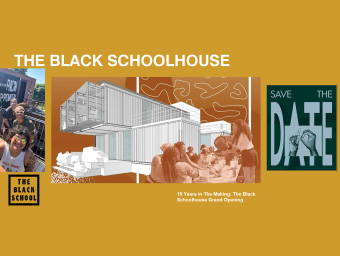
Sep 15, 2026
The Black School on Art News

Sep 14, 2026
The Black Schoolhouse on World Architects

Sep 10, 2026
The Black Schoolhouse on The Architect’s Newspaper

Jul 7, 2026
LOT-EK on Wallpaper* US400 list

Apr 6, 2026
LOT-EK and Carroll House on PIN-UP 40
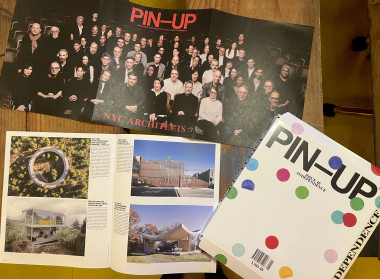
Mar 16, 2026
LOT-EK on koozArch